Requirements and Specifics of the EPR Mineral and Synthetic Oils

The EPR mineral and synthetic oils is one of the most specialized environmental programs in France. Established by the AGEC Act and operational since January 1, 2022, it requires producers to fund the collection and regeneration of several hundred thousand tons of used oil each year.
Whether they are auto repair shops, manufacturers, or online retailers, all stakeholders must now understand this limited but highly regulated framework, which is based on free take-back for professional owners and prioritizes remanufacturing.
The EPR mineral and synthetic oils: a special case.
Reading time: ~10 min
1. EPR for mineral and synthetic EPR : framework and scope
4. Obligations of market makers
5. Technical Differences and Their Impact on the EPR
6. What this means for online sellers
EPR for Mineral and Synthetic EPR : Framework and Scope
The European Waste Directive 2008/98/EC was implemented to stabilize a Scheme in 2016 by the drop in oil prices. A decree issued in late 2021 incorporated the collection of used oils into the EPR framework, supplemented by new provisions that took effect in 2024.
• Mineral oils derived from petroleum refining and used as engine lubricants or industrial oils
• Synthetic oils produced through chemical synthesis for the lubrication of engines and industrial equipment
These products generate approximately 239,000 metric tons of used oil per year in France, primarily from the automotive sector and industry. All distributors must cover the costs associated with the end-of-life management of these oils through an environmental fee paid to an accredited recycling organization.
Why the EPR a special case
Prior to 2022, a collection scheme had been in place since the late 1990s, but remained dependent on economic conditions. The EPR framework EPR legal and financial EPR the Scheme ensure specific objectives are met.
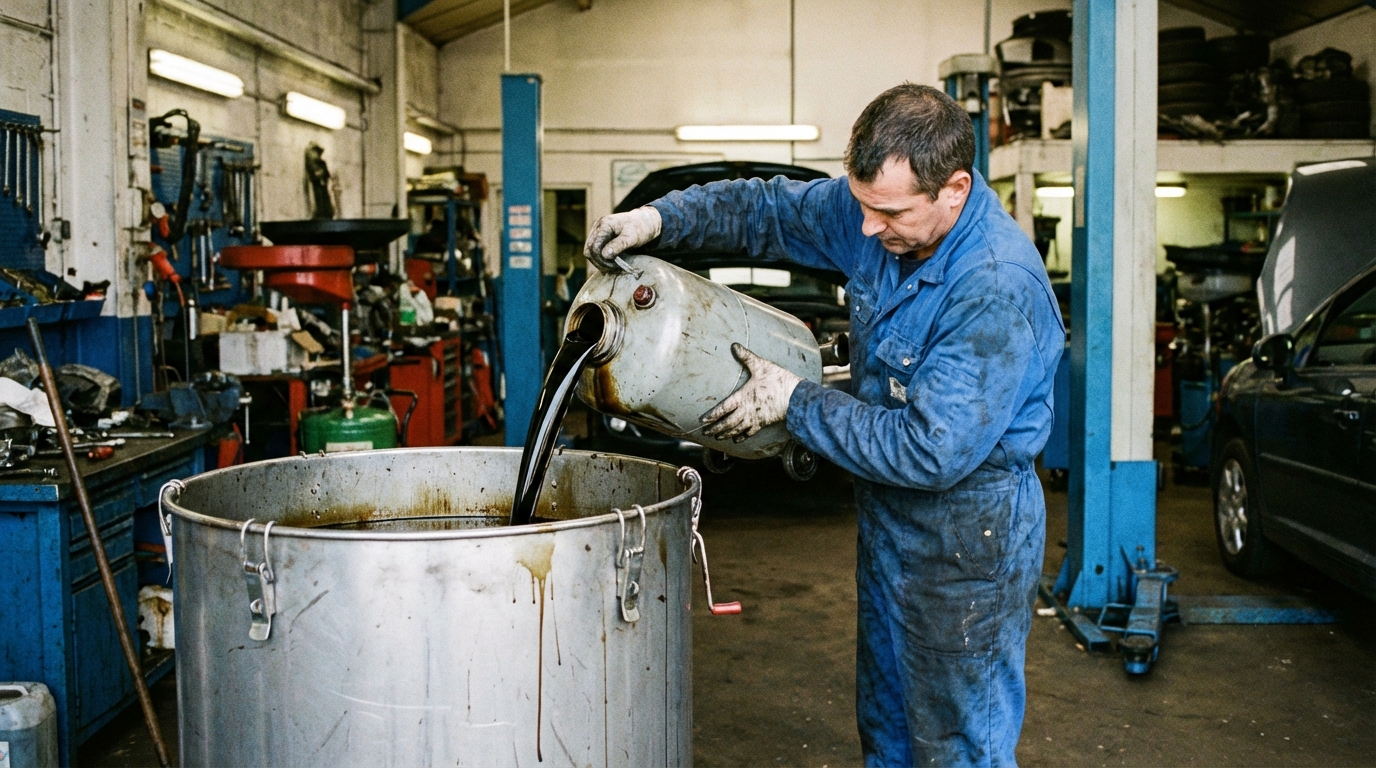
• Free collection of used oil for commercial customers, provided it is stored properly and has not been mixed with other oils
• Prioritize regeneration to produce new base oils rather than simply using them for energy recovery
• Enhanced traceability with strict reporting requirements for producers and eco-certification bodies
This combination of a limited scope, free access, and a focus on regeneration makes the Mineral EPR a concrete example of the circular economy applied to a potentially highly polluting waste stream.
Summary of Key Features
Single scope
What this means: If you sell motor, transmission, hydraulic, or industrial oils, this applies to you—even if you’re based abroad.
Free pickup
What this means is that producers use the eco-contribution to fund the free collection of used oil from businesses.
Scheme , solid history
What this means: an evolving regulatory framework (the “hybrid” model for 2025); the need for continuous adaptation.

Traceability and prevention of cross-contamination
What this means is that proper storage and sorting determine the quality of the recycled material and the costs incurred by producers.
Obligations of market makers
Producers include manufacturers, importers, distributors, and online retailers that ship to customers in France.
Key requirements: registration with an eco-organization (e.g., CompliancR), reporting of tonnage, payment of the eco-contribution, and compliance with collection/recycling targets. Since 2025, the “hybrid” model has allowed the eco-organization to directly manage part of the collection.
For e-commerce businesses, these requirements come on top of other EPR schemes, which is why centralized solutions like the CompliancR platform, which automates product identification, the calculation of eco-contributions, and the preparation of declarations. Discover how to automate EPR compliance using dedicated tools.
Technical differences and their impact on the EPR
Mineral oils: derived from petroleum, cost-effective, frequent oil changes (≈5,000–7,500 km): higher volume of used oil.
Synthetic oils: produced through synthesis, offer better thermal stability, and allow for longer oil change intervals (≈10,000–15,000 km), but their additives are more difficult to regenerate.
Mixing the two types is still not recommended: it reduces performance and complicates regeneration. This is why regulations require that they not be mixed and that they be stored in sealed containers.
What this means for online sellers
Selling oils or products containing oils to French customers requires: registering with an eco-organization, obtaining a unique EPR identifier, structuring catalog data to apply the correct fee schedule, and keeping track of annual updates. French marketplaces are increasingly requiring this identifier.
The EPR CompliancR serviceCompliancR these processes, scans barcodes, applies the most up-to-date fee schedules, and provides a single dashboard—a valuable tool in light of the upcoming European regulation strengthening traceability.
Frequently Asked Questions
Does this apply to small online sellers? Yes, there are no exemptions based on company size or revenue.
I only sell machines that contain oil: does this apply to me? It depends: if the oil is not intended to be replaced by the end user, a different Scheme apply. A detailed review of the catalog is required.
How can I verify the accuracy of my reports if I manage multiple streams? The combination of different rates and thresholds makes manual verification unreliable; an automated solution that continuously recalculates eco-contributions helps prevent errors. For more information, see our guide on EPR compliance.

In summary
With its targeted scope, free collection, and recycling requirement, the mineral EPR exemplifies the expansion of producers’ environmental responsibility in France. For online sellers already navigating other EPR schemes, centralized management by a service provider such as CompliancR compliance and CompliancR a consolidated overview of obligations.